

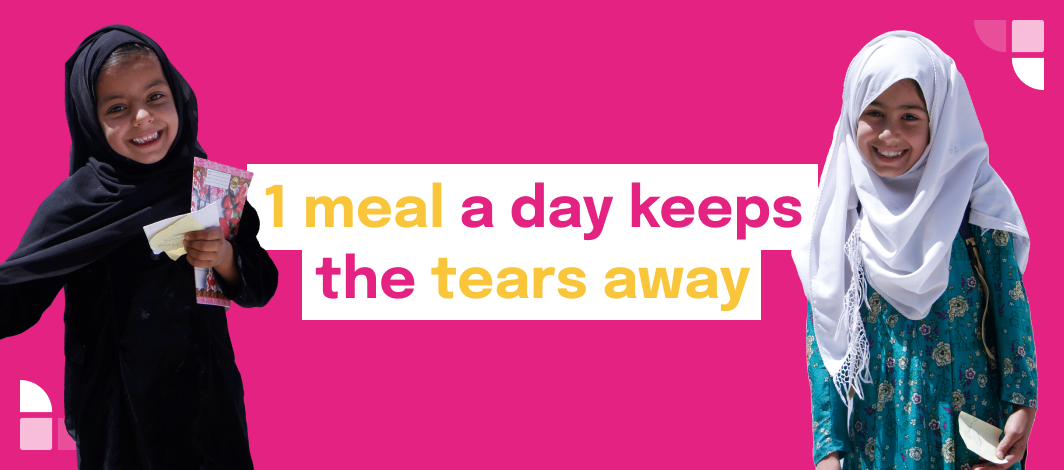
With pupils around the UK eagerly awaiting their A-Level results, it won’t be long until they’re opening envelopes, huge smiles plastered on their faces, knowing full well that their dreams are only just beginning…
They may spend most of their time complaining about school, moaning about teachers and avoiding homework like the plague – but it’s worth it when they realise what their education can bring them: hope and a brighter future.
It’s precisely this hope that many of us in the UK take for granted.
As much as we moan over here, it’s easy to see that we’re in an incredibly envious position – especially compared to some countries and what they’re going through.
Inspired by our A-Level students, we want to bring a bit of that hope to Afghanistan’s children.
How can we do that? Well, we’ve got a plan – and we need your help to see it through.
What’s the Problem in Afghanistan?
The Economy
‘Afghanistan was already one of the poorest countries. Now, it is experiencing the most rapid economic collapse the UN has witnessed.’ [International Crisis Group]
But it’s become even worse recently.
The previous Afghan government was heavily reliant on international aid. In fact, over 70% of all public spending came from foreign donors. That includes healthcare, education… you name it. Now that they’re having to make do without foreign aid, the economy’s really struggling.
To make matters even worse, their currency is printed in Europe, but shipment of currency to Afghanistan has now been halted… and they can’t print their own money, meaning cash withdrawals are heavily restricted. While we keep tap-tapping away with our contactless cards, Afghanistan is a cash-based society. In other words, even those who have money in the bank are finding it difficult to withdraw what they need for essential items.
And now the currency is dropping in value, the price of food is increasing.
Sounds familiar, right?
Sadly, it’s considerably worse in Afghanistan than it is here.
Education and Food Security
Although the conflict has had a devastating impact, Afghanistan’s food insecurity has been made worse by droughts. They’ve suffered two major droughts in the last four years, with the most recent one being the worst in 27 years. That means agricultures suffers and there’s less food to go around, hiking up the price even more.
It’s being called the worst humanitarian crisis in the world – and that’s mainly because a shocking 22 million people face a food crisis.
People have become so desperate that some are even selling their kidneys just to buy a meal. And when you consider that 40% of the population live on less than $1.25 each day, it’s hardly surprising.
And that’s where it all starts to affect education…
With so little money going around, many families need their children to venture out into the world to get some much-needed extra income. In fact, up to 2.1 million Afghan children drop out of school to help their family earn that little bit more.
Where Better to Start than Afghanistan’s Capital City?
When the US pulled out in 2021, thousands fled to Kabul in the hopes of leaving the country, terrified for their safety. Up to 700,000 internally displaced people (IDPs) have stayed there since, hoping the borders will reopen…
Remember, there were IDPs in Kabul before.
Now, there are over 3.5 million.
IDP communities are particularly vulnerable; tasked with rebuilding their lives from scratch, they live in makeshift housing with few facilities and even less security. Desperate for money, children drop out of school to work, many finding money on the streets and some families resorting to selling their daughters.
But it’s not much better for those who are able to go to school. With so little food to munch on, how are they supposed to concentrate? You can’t focus on anything when your tummy’s rumbling, and that has a huge impact on their academic progress. With less education and a shocking illiteracy rate, there’s no wonder they can’t break out of the poverty cycle that goes on and on…
So, What’s the Solution?
While the government provides academic and religious education, without the right funding, it’s hard to afford enough textbooks for each child! So, these children need an extra helping hand.
We have a plan.
You might have heard about it when we announced its launch at the start of 2022. It won’t solve every problem and won’t help everyone all at once – but it’s a small step in the right direction.
We’ve launched in four districts throughout Kabul; in Paghman, Charsyab, Sarobi and Shakardara, all of which are slums around Kabul City with lots of IDP communities. In each district, we offer school meals to 856 boys and 1,380 girls – a whopping 2,236 kids in total.
And that’s not even including the teachers and cooks we feed too.
Every child and staff member receives a healthy, tasty and nutritious meal every day, and each meal includes lentils, milk, dates, bread, beans, spinach, potato… everything a growing boy or girl needs!
How Do School Meals Help?
It’s not an instant fix, but the magic behind school meals has a domino effect that has a huge impact later down the line.
In the short term, the promise of a meal – especially a tasty and healthy one – attracts children to schools. And parents, with one less meal to buy, are only too happy to send their children to learn. They come for the food, then stay for the lessons… With any luck, word gets around, and schools see higher enrolment.
In the long term, Kabul children will have better physical and mental development, there will be a lower dropout rate, and the children will be better educated. Just imagine – lower illiteracy levels and improved earning potential…
This is the secret ingredient to reduce poverty and help break the cycle for future generations.
And This Is What We Need From YOU!
So, we’ve got a special formula to help Afghan children break the cycle of poverty. This programme needs more than just cash to buy food. We need to fund less glamorous aspects too, like building the right facilities, purchasing the necessary equipment, hiring the relevant staff… it’s not an easy operation and it all comes at a cost.
We’re not asking for you to fund the whole thing – but hey, by all means if you want to, we won’t say no – instead, a little goes a long way.
Many people don’t think twice about a month of Netflix or getting a few coffees at Costa – a whole month of school meals for one child costs just £13. And the child you sponsor could be the one to help the rest of this community break the cycle of poverty.
It’s up to us to help Afghanistan and you can be a part of that.
Donate today to feed a child – because a meal a day keeps the tears away.