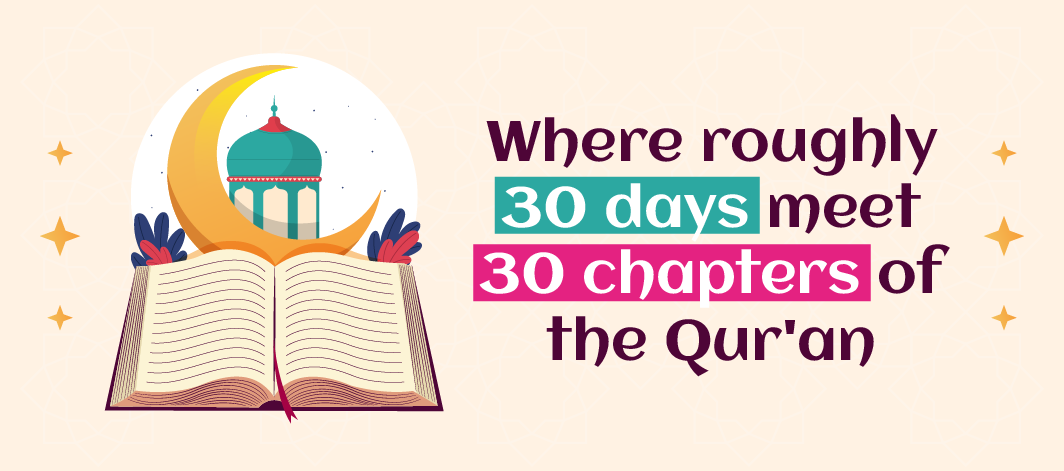
Ramadan is a significant month in the Muslim calendar, a period where many Muslims around the world decide to recite the entire Quran within just 30 days. Fortunately for us, the rewards and blessings for good deeds in Ramadan are multiplied.
Many muslims seek to take advantage of this by fasting, making prayers, and completing their recitation of the Quran. it was also the month in which the Quran was originally revealed to the holy prophet Muhammad (PBUH).
But with our busy day-to-day lives, it can be a daunting challenge. With time running out, every day counts if you want to complete the Quran before the end of the month.
However, with the right plan and intention, it’s certainly possible for you to be able to complete your Quran recitation before the holy month of Ramadan ends.
How is the Quran Structured?
The Quran is an extremely intricate book, that is a direct revelation from Allah (SWT). This means that it is infallible and contains no errors. The same can be said about its structure. The Quran can be split into:
Ayat
The Quran is composed of verses, known as ayat. These ayat are the building blocks of the Quran, and are the smallest unit of measurement. There are 6348 ayat in the Quran including Bismillah.
Surah
A surah is a chapter in the Quran, and each surah is named after a specific word or theme mentioned in the text. The length of the surahs vary, some are as short as 3 ayat, while others can be as long as 286 ayat, In total there are 114 surahs in the Quran.
Juz’
The Quran is also divided into 30 parts, known as juz’. This division was established in the early Islamic period to facilitate the complete recitation of the Quran during the month of Ramadan. One Juz’ contains approximately 20 surahs, with the exception of the 30th juz’, which contains only the last three surahs of the Quran.
How to Prepare to Recite the Quran
It’s not as simple as just opening up the Quran and reading it. There’s a specific adab (etiquette) you need to follow to recite the Quranic verses.
For example, you should be in a state of wudhu first, dress appropriately, and begin with the Ta’awwudz and Basmalah.
Ideally, you should aim to read the Quran before or after your prayers; that way, you’re already in a state of wudhu, dressed properly, and in the right spiritual mood.
As you read, make sure to go slow and understand what each verse means. The aim is to experience and truly understand the meaning of the Quran – the goal isn’t to speed-run and finish it as soon as possible.
How Are You Rewarded for Reciting the Quran?
The best part about reciting the Quran is you don’t get just one big reward or blessing for reciting the entire Quran. Instead, you’re rewarded for each letter… not each surah, ayat or word – but each letter.
“Whosoever reads one letter from the Book of Allah will earn one reward thereby. One reward is equal to ten rewards the like of it.” [Tirmidhi]
So even if you think it’s unlikely you’ll be able to complete the whole Quran in the holy month, it’s worth doing whatever you can, so long as you the right intention.
If you just begin by completing the recitation of a few pages or verses, Allah (SWT) will still reward you for it and you’ll benefit from the numerous blessings.
Intention is key in Islam. Umar Bin Al-Khattab (may Allah SWT be pleased with him) narrates that the prophet Muhammad (PBUH) said, “the reward of deeds depends upon the intentions”. Having the intention of doing an act for the sake of Allah (SWT) will stand you in good stead when it comes time to be judged.
Besides, practice makes perfect, and you’re rewarded just for trying. Not every Muslim is fluent in Arabic – something that makes reciting the Quran much more challenging. But since Allah (SWT) is all-knowing and ever merciful, He still rewards the effort.
But the rewards you receive are more than just blessings from Allah (SWT). Reciting the Quran can help you grow spiritually and become a better and more complete Muslim. The words in the holy book can help you find inner peace and answers communicated to us from Allah (SWT) himself, the source of divine guidance.
“The best of you are those who learn the Quran and teach it.” [Sahih al-Bukhari]
How to Finish the Entire Quran in Ramadan
The Quran isn’t a quick and easy read. It can be very challenging to complete the Quran in 30 days. That’s why many people wonder how many pages are in the Quran, intending to split it up that way.
Here are some practical steps to achieve a complete reading of the Quran, and recite every verse during the month of Ramadan.
It’s easiest when you divide it up into 30 juz’ – one for each day. Just be aware that they do tend to vary in length – some are shorter, some are longer, but they tend to be approximately 20 pages long.
Aside from dividing the book into 30 juz’ you can divide the pages of the juz’ themselves up throughout each day too.
For example, you can read four pages before or after each obligatory prayer of the day.
Alternatively, you can read five pages in the morning, midday, afternoon and night, or even ten pages in the morning and evening.
However you decide to split it up, it’s much easier to complete the Quran in 30 days if you keep a regular routine, rather than just reading two pages here and there.
For some people it is a Ramadan journal that will help them finish Quran recitation. People attempting to complete the reading of the Quran in 30 days will often keep note of the number of verses or pages they’ve been reading. This helps to keep the goal of completing your recitation of the Quran more manageable.
Another tip to help keep you motivated and on top of everything is to join a group of other people interested in reciting the Quran in Ramadan. You can recite the entire juz’ together or even split them up to share the burden.
Don’t feel confined to people in your local community either – one thing we all learned from the pandemic is that we can use things like Zoom to do this online.
To finish reading the entire Quran in just one month can seem a daunting challenge, especially when you must already pray five salah a day. But if it’s something you want to do, the best advice is to just get started with it. It is highly recommended to read it all in the holy month of Ramadan. The more you put it off, the harder it will be to catch up. So it’s better to stay consistent and recite the Quran on a daily basis.
Share the burden of reciting the holy book with others if you can, split up the Quran into 30 juz’ to keep it manageable, and keep it as part of your everyday routine. This is a great way to connect with friends and family during the sacred month. With the right intentions, every person involved will achieve spiritual growth and grow closer to the creator, Allah (SWT). This can help instill sincerity and faith within the younger members of the Ummah who need guidance the most.
Of course, Ramadan is the best time for a sunnah like Quran recitation, but there are many other acts you can do to worship Allah (SWT) in Ramadan and get rewarded in return. For example, many choose to give Sadaqah and donate to charity. If you’re feeling generous, please click here to donate now.