

It’s safe to say that 2022 hasn’t panned out the way we hoped…
· Covid is still out there
· There’s conflict around the world
· Climate change is getting worse
· Prices seem to be rising non-stop
And all of this affects food security around the world.
It’s all looking pretty bleak.
But World Food Day gives us an opportunity to pause and reflect. Yes, things aren’t going too well, but there’s still hope that we can change thousands of lives for the better.
How?
Our solution: providing school meals and leaving no one behind.
The Truth About World Hunger
Here are some sobering truths for you:
· 40% of the world’s population can’t afford a healthy diet. That’s 3.1 billion people.
· Women are 15% more likely to be food insecure than men.
· 160 million children throughout the world are forced into child labour to afford food.
But why are so many people struggling to find enough healthy food to survive?
Sadly, there’s no easy answer to this.
Conflict is one reason. Each day, over 30,000 people have no choice but to flee their homes to escape conflict or persecution. Starting over in a brand-new country, they have little money or chances to afford food.
In fact, conflict even forces the price of food to increase. Look at the Ukraine-Russia conflict: Ukraine is one of the world’s leading exporters of staple foods like wheat, barley, and corn – and the war is making these foods more scarce and more expensive.
And higher costs just aren’t affordable for many people. Millions are unable to spare the cash for a healthy diet; they have to make the impossible choice between food insecurity and hunger or an unhealthy diet that leads to malnutrition.
Climate change also plays a huge role in food insecurity. With our ever-changing climate, agricultural yields are suffering, and the nutrient composition of major staple crops is actually changing for the worse…
People who rely on these foods aren’t just struggling – they’re starving with no help! They’re being left behind.
What Happens When They’re Left Behind?
Perhaps you rely on any food you can find – cheap, fast food.
That’ll do, right?
While a cheeky Big Mac won’t hurt, relying on fast food can have short and long-term complications that ruin your body’s health. That’s all because it’s super high in sugar, salt, saturated and trans fats, processed ingredients and calories – and of course it’s low in antioxidants, fibre and other nutrients.
In the short term:
· Fast food gives a spike in blood sugar followed by a big drop that makes you tired and struggle to focus… It then makes you hungry again.
· It can cause inflammation in the body, including your airway, triggering asthma attacks.
· You’re not getting enough fruit or vegetables.
In the long term:
· Fast food causes cardiovascular conditions that increase the risk of heart attacks and strokes.
· It causes higher cancer rates and increase risk of Alzheimer’s and Parkinson’s.
· It can even increase and trigger asthma and eczema.
In short, not all food is good for you – we need to prioritise nutrient-dense food opposed to calorie-dense options.
Here’s Why World Food Day Is Our Favourite Day!
But this is why it’s not all as bleak as it looks – help is on the horizon! And that’s what we’re focusing on for World Food Day 2022.
World Food Day is one of the most celebrated days in the UN calendar, with hundreds of events taking place across 150 countries, involving governments, businesses, and the media. It’s all about promoting awareness and action for those who are suffering from hunger.
Taking place on the 16th October each year, World Food Day officially commemorates the founding of the United Nations Food an Agriculture Organization (FAO) in 1945, a group whose goal is to reduce hunger and improve food security across the globe.
Since 1981, there has been a different theme each year, highlighting specific areas that need focus. For example, in 2020 it was ‘Grow, Nourish, Sustain. Together’, showing the importance of coming together – especially in a pandemic; and in 2021 it was ‘Safe food now for a healthy tomorrow.’
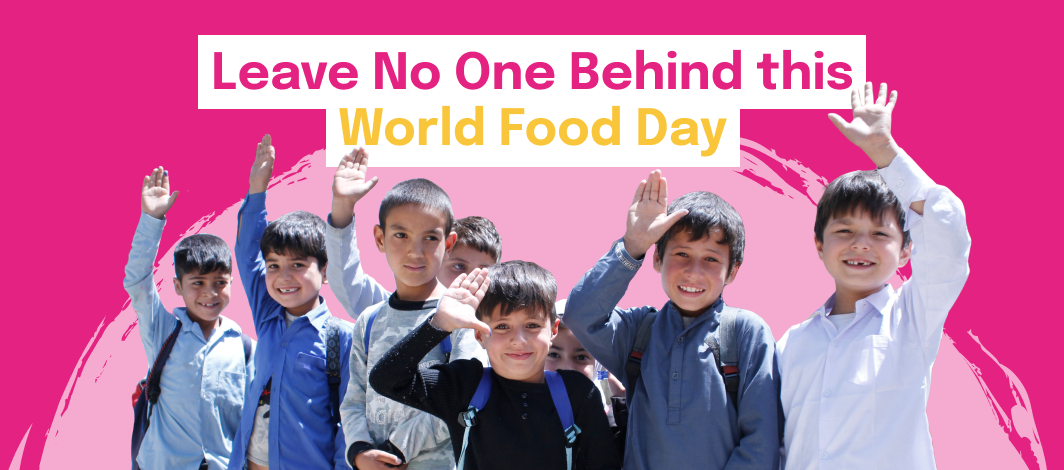
In 2022, the theme is ‘Leave NO ONE behind.’
That means we can’t just focus on feeding the hungry in the UK – we need to focus on people abroad, even in other continents… There are people in Pakistan, Bangladesh, Malawi, and Ethiopia who are increasingly being left behind to starve.
An Apple a Day Does More Than Keep the Doctor Away
Healthy food simply means better health.
Children especially need a varied and balanced diet while they’re growing. Calcium strengthens bones, protein builds muscle, carbohydrates give energy, and iron make blood healthy. Meanwhile, food like fish, broccoli and berries improve cognitive functions and memory.
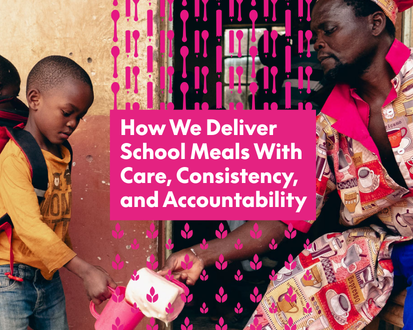
That’s why Charity Right focuses on giving children nutritious, health-boosting school meals with plenty of vitamins and minerals. The children get rice, lentils, meats, eggs, bread, fruits, fresh milk, soft dates, and more!
These varied and healthy meals give our children the energy and health they need to enjoy their childhood and live life to the full.
But it’s more than that.
With school meals, well-nourished children are 34% more likely to retain information they learn in class, 3.4 times more likely to focus, and even see a 16% improvement in their grades.
All for One and One for All
School meals benefit more than just children though. Healthier children with better education grow up to influence and help others in the community. So, you don’t just invest in the future of the children, but the future of their community to ensure no one gets left behind.
Leave NO ONE Behind
World hunger isn’t a problem that’s going to go away by itself. But with thousands of people rallying together even just once a year for World Food Day, we’re getting closer to the solution.
And for us at Charity Right UK, the solution includes providing school meals to ensure children are healthy and able to access education, so they don’t get left behind.